Monday, August 16, 2010

Travel Nutrition: Remember to Hydrate!

(This post is part of a series on travel nutrition by April Davis, RD, CD, CES. That's her above, practicing what she preaches!)

Positive Food Experiences with People to People

I recently had the opportunity to travel overseas with a People to People Student Delegation. I went to Italy and the French Riviera with delegation MH 0622110 out of Philadelphia. During my observation, we traveled to Rome, Assisi, Florence, Pisa, Montecatini, and Cinque Terra, Italy; Monaco; and Cannes and Nice, France.

Yes - it was amazing! But most importantly, during this experience, I was able to observe nutrition practices, meals served, and overall acceptance by students. It's important to consider these factors in conjunction with students' daily schedule and emotional and physical states during their time away from home.
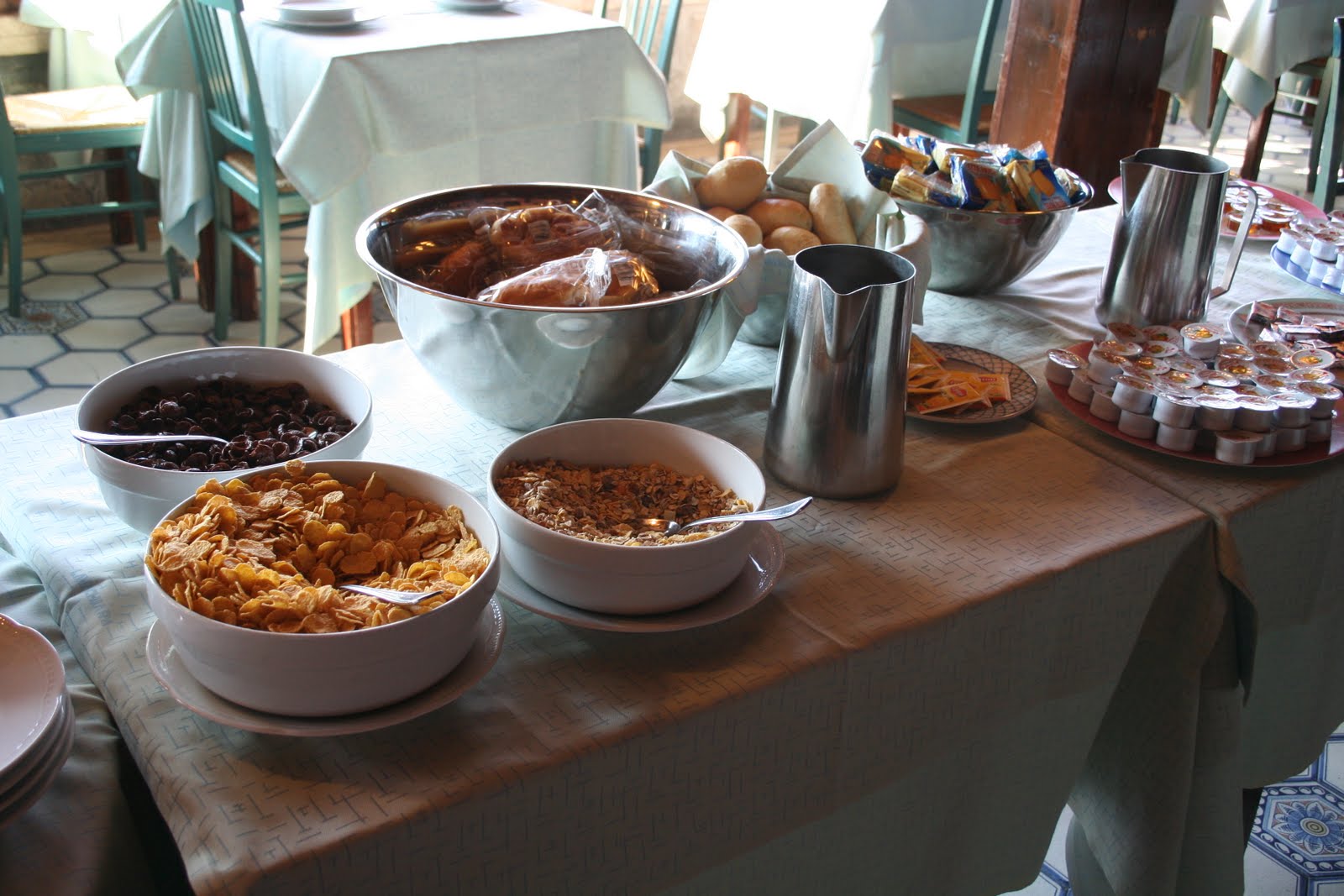
(Above, a photo of one of our breakfast buffets at a hotel in Italy. We had ample fluid choices including water, milk, juice, hot chocolate, coffee and tea.)

During my ten-day observation, I assessed adherence to meal plans, portions, presentation, palatability, and quality of foods served, as well as student satisfaction with the food. I witnessed numerous positive experiences and reactions while observing the delegation, including: adequate portion sizes, friendly and efficient restaurant service, agreeable palatability, and several unique food presentations.

It's Not Just the Food that Makes for a Positive Experience. It's the Water, too!

Something that was regularly stressed by the Delegation Manager and Leaders - but often disregarded by Student Ambassadors - was ensuring sufficient fluid intake. Given the active daily schedule, warm climate, possible sleep deprivation, and fluid losses that occur during airline travel, an increased intake of liquids - namely water - is required of Student Ambassadors.

(A scenic photo of the water in Cannes, France - although it's not the type of water I'd recommend drinking!)

As mentioned in one of my earlier blog posts, preventing dehydration during travel is the most vital factor in maintaining energy levels, overcoming jet lag, and staying healthy. Not only does dehydration have a negative impact on controlling body temperature, but it also affects heart function and transport of oxygen and nutrients to the working muscles. Poor fluid intake leads to fatigue and a delayed immune response, which greatly increases the chance of becoming ill while traveling.

Soda and other sugary, caffeinated beverages do not help with hydration. In fact, beverages that contain high amounts of sugar can contribute to dehydration and/or intestinal discomfort, dampening physical stamina and emotional health.

Your child can always use a loving reminder to drink lots of water while traveling. Most importantly, help him/her start hydrating at home, before boarding an airplane.

(Photo Credit: ToddMorris via Flickr)

During my time with Student Ambassadors, our Leaders reminded us to bring along our water bottles every morning. Even so, many Student Ambassadors were not proactive in filling their bottles when given the opportunity. On top of that, I saw most Student Ambassadors consuming soda at lunch and dinner. Overall, however, I witnessed a greater adherence to ample water intake toward the end of my observation period, leaving me to believe the Student Ambassadors were catching on!

For more tips on how to encourage Student Ambassadors to stay hydrated during travel, see my previous posts:

You can also visit the following links for further information on hydration for parents and teens:
- April Davis, RD, CD, CES

Tuesday, August 10, 2010

What does our Health and Safety Team Do?

That is an interesting question and one that I receive more often then not. I think the fact that People to People Ambassador Programs is the only educational student travel organization to employ a full-time senior director of safety and health is at the root of the issue.

Does safety matter to other student travel organizations? Obviously the answer is yes. What I have found is that many of these organizations place the health and safety responsibilities with the operations director who clearly has many additional duties.

Here at People to People Ambassador Program, Our CEO and President both had the foresight to envision a department that focuses solely on developing and implementing policies and procedures designed to ensure every student and leader is safe while traveling with our organization. We do also have the Senior Director of Ground Operations but have split out the responsibilities related to the safety of the students into a separate department. I am blessed with the privilege of leading this fantastic group of overachieving individuals.

Let me give you a little closer glimpse of a couple people who are on my team (above, in action at an on-call meeting) and their responsibilities to help to better understand what we do and how we do it.

First off I would like to start with Wendy Armes (above). Wendy is currently the Supervisor of the Medical team and has three travel seasons under her belt. Wendy’s team is responsible for collecting a health form for every student prior to travel. We have learned over the years that the best way to prevent an unforeseen problem is to make sure everyone who needs to know of a medical condition knows it in advance of travel.

Once the health form is received, Wendy’s team then determines for which students we need additional information on to assure their safety. We currently screen for over 300 medical conditions like visual or hearing impairment, mobility limitation, diabetes, and life threatening allergies (just to name a few). This process is called a medical hold in which case we work with the family and parents to make sure we have a solid understanding of any limitations a student may have. Once we have this additional information, we can then start working on a reasonable accommodation to make sure that student has the same great experience any other student would expect to have.

Next I would like to introduce you to Bethany Cress (pictured above). Bethany spends her entire year developing procedures and processes to reduce the chance of any incident happening on a program. She develops and delivers the training to every single associate who answers a phone during the on-call season. By providing this extensive level of training the associates dealing directly with the leaders and parents are better positioned to respond quickly and consistently to all incidents. These incidents can range from the milder request to have a student call home to the more severe situation that calls for medical attention. (As mentioned in my last post, our current travel season is yielding more mild incidents, which is a good thing.)

During the summer travel season Bethany personally leads the on-call briefing every morning and every evening. Her obsession is to make sure that every single incident is followed up with timely and professionally to everyone’s satisfaction.

After the season comes to a close, Bethany then re-reviews every incident and looks for gaps in what transpired. Basically asking the question, "What did we want to happen?" "What did happen?" And was there a gap between those two results? If the answer is yes, she then goes to work to craft a better process and procedure to be implemented the following season to reduce the chance of that situation happening again. This new procedure then goes into the Leader Travel Handbook revisions and into the training curriculum for the next season and the whole process starts all over again.

This is just a small glimpse into some of what my team does here at People to People Ambassador Programs and only two of the many associates that have a singular focus. That focus is simply making sure every delegate and leader is safe on our programs. Maybe in future blogs I can expand on some of my other team members but for now, I am very proud to have these two outstanding women on my team and working to support every student.

So, what does the Senior Director of Health & Safety do? This brief article recently appeared in our 2010-2011 Ambassador Magazine and dives deeper into my role at People to People Ambassador Programs. I hope you find the information informative.

Until next time - I’m wishing you safe and happy travels.

Mike Bowers
Senior Director of Health and Safety

Tuesday, August 3, 2010

So Far, so Good on Another Great Travel Season!

First off, my apologies for this recent downtime on the blog. We are in full swing here! With roughly a month to go, I’m happy to report that the 2010 summer travel season has been a success so far (knock on wood).

(Sidenote: Growing up I played a lot of baseball and as ball players, we had a tendency to be a little superstitious. Some players need to wear the same socks; some have to take exactly the same number of swings prior to stepping into the batter’s box; and for others you might have to say the same prayer prior to taking the field. For me, knocking on wood when things were going well was a good way to make sure nothing changed.)

This year we have been knocking on a lot of wood and are happy to report incidents are up by 15.8%. That’s right I am happy to say reported incidents are up. Why you might ask? Well here’s my logic.

We have spent this past year providing extra direction and training for leaders and implementing procedures to better protect our students while on one of our life changing travel experiences. One key step in accomplishing that goal is to report every single incident, no matter how small, to the program office. That way we can help guide the leader to the proper conclusion of that incident. This also helps us ensure greater consistency in how issues are handled from one delegation to another.(Photo from Wonderful Graffiti decal.)

Just How Small?
As a quick reminder, every time a parent calls the office during the travel season with a request like “I haven’t heard from my son in a week, could you tell him to call his mom?” we open an incident report. ("Incident" sounds strong in this case. If you have a suggestion for a new term, please let me know by posting a comment on this blog.)

By opening an incident report, we put a detailed description of the request in our software system and then send an email out to all associates on the On-Call distribution list. This list includes virtually every one of our more that 224 associates, including all vice presidents,
the president and the CEO of the organization.


That means when a mom calls in with such a r
equest, everyone in our organization knows of that specific request and who is responsible for following up.

All this within minutes of receiving the call from mom.

(Above, my photo of Associate Whitney Jones, hard at work fielding calls.)

Resolving Incidents
We track the time an incident is opened and when it is closed. The incident can only be closed when every action item has been confirmed to have taken place.

For example, in the above scenario, the leader must confirm with our office that the call to mom was placed by her son and when. We can also confirm this directly with the mom. Once confirmed and we know everyone is satisfied with the resolution, we close the incident.

Quicker Turnaround
So far for 2010, the time it takes for us to properly resolve any incident has dropped more than 20% from .8 days to .64 days. Considering most of our delegations are spread around the world in opposite time zones, that’s a great accomplishment.


Having people in our program office 24 hours a day, seven days a week to take that call and to make the follow-up calls to the leaders and students is what makes it all possible. (Like Associate Sara Rees, in the photo above!)

Fortunately for all of us, this year hasn't yielded many extreme incidents (knock on wood). On the other hand, as of July 18th, we have had 365 parents call to ask if we could have their child call home. Parents, please, try to be forgiving. It isn’t that they don’t miss home at times (we had 105 homesick calls) it is really more about the student meeting some great new friends on the program and seeing some really amazing sites. They're on the go all day long and by the time the leader stops by for the bed check at night, they are just plain tuckered out.

But if you’re worried, give us a call and we will open an incident. Rest assured my staff will be making sure your child calls home as quickly as possible.

Until next time - I’m wishing you safe and happy travels,
Mike Bowers
Senior Director of Health and Safety

Monday, May 24, 2010

Preparations for a Fantastic 2010 Season

I can’t help but be excited about the launch of our 2010 travel season, and I’m sure you are all feeling the same way around your own homes. It all starts for us in just 8 days as our first delegations depart on June 2!

All of us here in our Spokane program offices, along with our many partners that we work closely with around the world, are very busy putting the final touches on our programs in preparation for the summer travel season. To get ready for the travel season we’ve put in hours of preseason training just to make sure we are on top of every aspect of the travel experience. We also spend a great deal of time preparing for the less–likely and unexpected events that occasionally pop up while on program so that we are ready for most anything.

Annual Leader University

A big preseason training opportunity happened just a few weeks ago when we invited all of our area directors and many teacher leaders to Spokane for our Annual Leader University. Each area director is responsible for a number of leaders within their region or home area. These people recruit, train, and manage their assigned leaders throughout the year. Twice a year, generally in the fall and spring, the area directors bring together all the leaders in their region. Normally the fall training focuses on preparation for the enrollment and interview process for the next season, but much of the training agenda is reserved for sharing best practices, updates on all policy changes, and a review of safety protocols we instill in our leaders. In the spring, the area directors bring all the leaders together for the last group training with a focus on ensuring that every leader is updated on the latest procedural information so that programs go off without a hitch!

This year we expanded our conference to three full days. The first day was dedicated to new area directors. We are pleased to say that most of our area directors have been with us for many years, so the opportunity to step into one of these roles is very limited. Each of these new area directors (ADs) has been a leader on our programs for many years and has earned the privilege of stepping into the area director position. We provide them the additional training before the veteran ADs come to town in order to bring the new area directors up to speed on information they will need to be successful.

The next two days are jampacked with information presented in a train–the–trainer format. A vast amount of information is shared for these ADs to take back to the teacher leaders in their areas. This network of training sessions ensures everyone in the organization - from the president to every single teacher leader - is on the exact same page. At the conference, every single person involved with the management or training of a teacher leader was in the same room hearing the same thing at the same time. We firmly believe that this translates into a higher degree of consistency in how each program operates no matter what part of the world the delegation travels to.

This year we had much new information to share. We conducted training sessions on everything from new changes in 2010 for the Americans with Disabilities Act to how to handle a coaching opportunity with a student who has trouble following the expectations set out prior to the program.

Leading the Way with New Tools

We also introduced new tools like the newly revised Leader Travel Handbook and our GPS–equipped cell phones. Each delegation carries no fewer than four phones on each motor coach: one with our delegation manager, one with the motor–coach driver, and two held by the leaders escorting the students on the program. This year, one of the two phones used by the leaders is equipped with GPS technology. Having this system on our phones allows us to pinpoint within feet exactly where every delegation is at any given point in time. Amazing!

We believe we are the first educational travel organization to introduce this technology on all of programs. Over time, it is our hope that other travel organizations will follow. Clearly, having the ability to know exactly where all delegations are at all times provides our students, their families, and all of us with a greater degree of security and safety for our students and leaders. If an unexpected event were to happen around the world, we could instantly check the locations of our groups and direct them out of harm’s way before a problem developed.

Be Prepared
These events rarely happen, but back in the summer of 2005 there was such an event when a bombing occurred in London. People to People Ambassador Programs had 2,500 students in the U.K. at the time, and, of those, 524 were in the London area. Working with our partners, we were able to quickly inventory every delegation to ensure their well-being and move them all out of the area very quickly. All of this happened in less than 30 minutes! During an event like that, every minute counts, and this is exactly why we have made the investment in the new GPS tracking technology. If a similar event were to happen in the future, we could simply pull up our screen and see exactly where each and every group was located.

With the software developed by Cellhire, our cell–phone–rental partner, we can literally see the road a delegation is standing on with a pin mark bearing the name of the leader who is carrying the phone. By use of phone and SMS messaging, we can then simply provide directions to exit any area that poses any type of threat. We piloted this system last season with great success on approximately 70 programs, and this year we are rolling it out to every group.

This type of phone is also available to rent for the student. Parents can even sign up with Cellhire for a minimal fee and be given access to track their child. By using the street–view option, parents can even see many of the wonderful places students will see! To find out more about phone rentals and the types of equipment available, just go to www.cellhire.com/ambassador. Cellhire has many other phone options, but I have to admit after working with these GPS phones - they are pretty cool!

Until next time, I’m wishing you safe and happy travels,

Mike

Monday, April 26, 2010

Nutrition for Travel


The top tips for maintaining good nutrition while traveling with People to People Ambassador Programs are to stay hydrated and eat a balanced diet.

Stay Hydrated
Preventing dehydration both before and during travel is vital to maintain energy levels, overcome jet lag, and stay healthy while abroad. Not only does dehydration have a negative impact on body temperature, but it also affects heart function and the transport of oxygen and nutrients to the working muscles. Poor fluid intake leads to fatigue and a delayed immune response, which greatly increases the chance of becoming ill while traveling.

1. Bring a water bottle
  • Student Ambassadors should be in the habit of carrying their water bottles with them wherever they go. This can begin at home weeks prior to travel, which will help ensure adequate hydration before the trip. Be sure to pack the empty bottle in your suitcase rather than carrying it on to avoid delays at airport security .
2. Drink extra on the plane
  • Aim for at least 1 cup of fluid for every hour of travel. Don’t be shy about asking the flight attendants for water. Many international flights have glasses of water already available in the kitchen/galley areas for passengers to help themselves. (This gives you an opportunity to stretch your legs, as well!)
3. Drink beyond thirst
  • Adolescents and children have a diminished thirst sensation. As a Student Ambassador, you will be very active during travel, which will also dull your thirst mechanism and require an increase in fluid intake.
  • In preparation for travel abroad, get in the habit of drinking fluids throughout the day, even when you don’t feel thirsty.
  • When taking fluid breaks, drink more than necessary!
4. Choose water
  • Drinks that contain high amounts of sugar can lead to further dehydration and/or intestinal problems.
  • Limit soda, coffee, and tea, as these act as diuretics and can worsen dehydration.
  • Your delegation manager will be a good source to determine if tap water in a specific country is suitable for drinking or if bottled water is the best option.
Eat a Balanced Diet
A variety of healthy foods, eaten consistently throughout the day, will help ensure adequate blood sugar levels, assist in overcoming jet lag, and increase immune health.

1. Have 3 meals and 2-3 snacks per day
  • Spread snacks and meals evenly throughout the day to maintain energy levels.
  • Snacks should mostly consist of whole grains , fruits , and veggies, but they should also contain some protein to avoid sudden spikes in blood -sugar levels.
  • Portable travel food ideas: If it is available, grab an extra piece of fresh fruit at breakfast to eat as a snack later. There will be many opportunities to purchase snacks along the way. The best choices would include items such as trail mix with dried fruit, cereal, nuts , yogurt , milk , chocolate milk , string cheese , whole -grain crackers , peanut butter , granola bars , and WATER, WATER, WATER!
2. At each meal, choose at least one item from each of the following groups:
  • Whole -grain products
  • Milk products
  • Vegetables and fruit
  • Meat and protein alternatives (nuts, beans, eggs , etc.)
For more information, visit: KidsHealth.org

April Davis, RD, CD, CES

Wednesday, April 7, 2010

Safety First on the Mountain and Abroad


In addition to my duties as the senior director of health and safety for People to People Ambassador Programs, I also deal with health and safety issues in my personal life. Every Friday night, I serve as a ski patroller at Mount Spokane Ski and Snowboard Park. On the mountain, my role is to serve as a friendly host for mountain management, and to respond to any customer who has fallen or is injured. My first introduction to the ski patrol happened when I lived in Minnesota at the famous Buck Hill, where Olympic Gold Medalist Lindsey Vonn got her start.
I bring up Buck Hill not because of the connection to Mrs. Vonn or the many other champions that learned to race on this small hill, but instead to share an important lesson I learned there. This lesson has had a direct impact on what I do today for People to People Ambassador Programs; more specifically, on how our teacher leaders are trained.

That's Not Your Name!

One night, while in the aid room of the Ski Patrol building at Buck Hill, I found myself in conversation with a medical doctor who also happened to be a patroller at Buck Hill. The patroller’s name tag was not the name I knew, and I had to know the reason behind his deception. I asked him, “Why do you have that name on your name tag? That’s not your name!” His answer was that in his daily life he is an orthopedic surgeon, but when he is on the mountain, his role is to perform as a ski patroller, not a doctor. The reason he changed his name tag and went by a completely different name while on duty was his way of reminding himself that he is only to perform the duties and skills a regular patroller is expected to perform.
At the time I didn’t grasp the magnitude of what he was saying; in fact, I found it a little strange. This man possessed the knowledge and skills to perform corrective surgery right on the hill, but deliberately chose not to. In hindsight, I should have known better, as this topic was covered as part of my initial training at Buck Hill, and it came up again when I went through the entire Outdoor Emergency Care Course (OEC) to become a patroller for Mount Spokane.

Leader Roles and Requirements
At People to People Ambassador Programs, our teacher leaders face a similar dilemma. Many of our leaders are school nurses or student counselors in their normal role as a teacher, but when they are on our program they are responsible for the health, safety, and guardianship of your child. In this role they are trained to only perform the duties expected and required of our leaders.

Each of our leaders completes a grueling application process to become a People to People Ambassador Programs teacher leader. This process includes the application process, letters of recommendation, and a background check that must be updated on a regular basis. They must also complete hands-on CPR training annually, a complex set of annual on-line training modules including competency testing, and in-person group training provided by our local area directors. These individuals are highly trained by our organization and bring to the role their countless years of experience in the classroom educating and developing young talent. But if a situation arises on program where a student needs medical attention, or some form of counseling, these teachers will contact our program office and the on-call team that stands ready 24 hours a day, seven days a week to support them and receive guidance on the next steps to be taken. They will most always be instructed to seek professional medical attention so that we know without a doubt how to treat the problem.

Much like the patroller at Buck Hill, a teacher leader may possess the skills to address the more serious issues that come up, but will instead stay within the definition of the role of a teacher leader and in that role, move to expediently transport the student into the professional medical emergency response system (EMS).

Our Policy

At People to People Ambassador Programs, we think this is the best method for handling serious situations, not a small scratch or bump. If something minor needs treatment, a leader will address that situation using one of the travel first-aid kits we provide to each primary leader. The larger situations I am referring to are highly unlikely, yet more serious situations where we want a medical professional’s opinion. Once in the EMS system, we can then leverage our relationship with On-Call International. They provide our organization with interpreters who connect a doctor on the On-Call staff with the physician treating the student abroad. This way, we get accurate and reliable information in a timely manner so that we can keep the family back home informed while ensuring the student is in safe hands.

I’m not saying that any of our teacher leaders has changed his or her name while on program. I’m merely using a rather extreme example to convey my point: our teacher leaders stand ready to respond to any situation. They are highly trained, and in the unlikely event that a serious situation arises, they know to perform to the level required of a teacher leader, and to quickly, calmly, and efficiently transport any student to a medical facility if there is any doubt about the student’s condition.

Until next time, wishing you safe and happy travels!

Mike